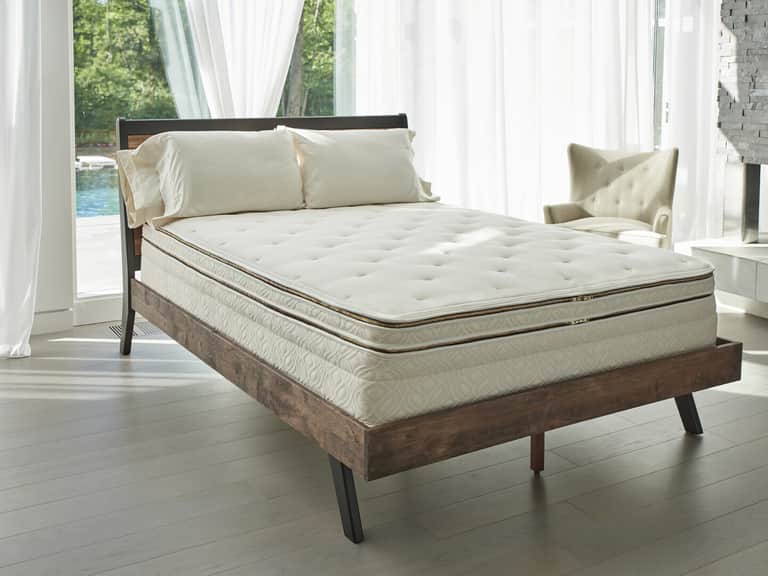
Hybrid mattresses combine the support of innerspring coils with the contouring comfort of memory foam or latex to deliver a balanced sleep system. This category highlights models designed to provide pressure relief while maintaining responsiveness, making them suitable for a variety of sleep positions. Understanding coil count, gauge, and transitional layers helps compare firmness, durability, and overall sleep compatibility.
In the context of Minnesota beds, hybrid designs emphasize durable coils paired with comfort foams or natural materials. Key features to note include zoned support for targeted spinal alignment, edge support to maximize usable surface, and cooling technologies such as breathable covers or open-cell foams. These elements collectively influence sleep temperature and overall comfort.
The Naturepedic Azure Hybrid Organic Mattress and Naturepedic Arcadia Hybrid Organic Mattress exemplify organic hybrid construction. Both models integrate consistent coil systems with organic cotton covers and non-toxic, plant-based comfort layers. They offer cradle-to-cradle-like sustainability along with durable support that suits back, side, and combination sleepers.
Functional benefits of hybrid mattresses include stable support across the surface, reduced motion transfer for couples, and versatile firmness options. The Azure and Arcadia variants emphasize natural materials, allergen resistance, and low-VOC components. For households considering adjustable bed foundations, these hybrids can be compatible with a range of frame types and bed bases.
Key considerations when evaluating hybrids involve firmness level, density of comfort foams or latex, and the durability of the coil system. Understanding how zoned coils, edge reinforcement, and organic or eco-friendly materials affect durability, temperature regulation, and relief can inform long-term comfort. Keywords such as adjustable beds, platform bed frames, and bedding align with the broader sleep environment context.
 Mattresses